 ldmanrahul
Break Stasis
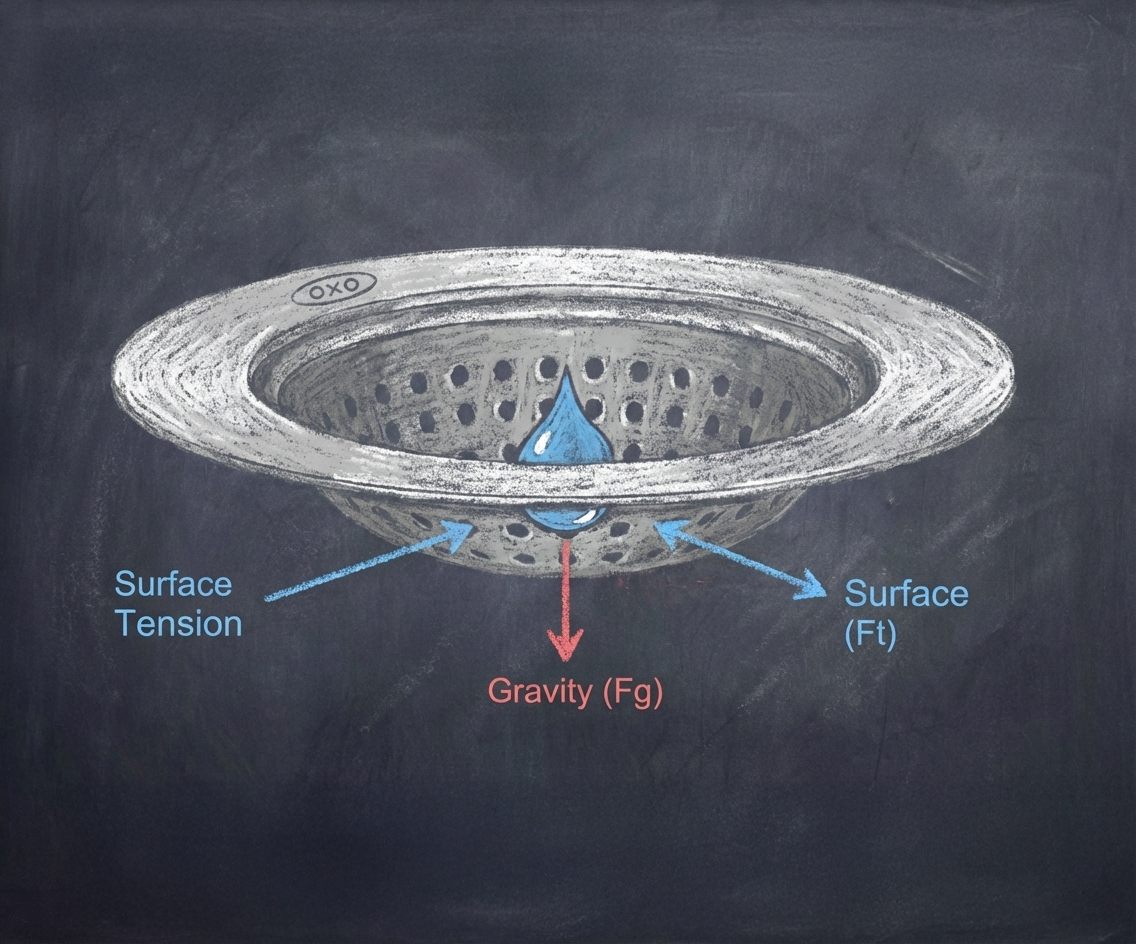
I have this OXO sink strainer that plays a simple role in the system that is my kitchen sink: drain the water, catch the food.
The other day, I let it sit overnight with some bits of food. In the morning it looked bone dry, so I picked it up to empty it into the trash and to my surprise—drip drip drip—water everywhere.
I got annoyed. “You had one job. You’ve been sitting there all night. How is there still water in you?”
My mind quickly jumped to those force diagrams they taught in high school physics. I saw the horizontal forces holding that water in place were stronger than gravity trying to pull it down. Surface tension beat gravity. The food catcher wasn’t “failing”, I concluded, it was just at equilibrium.
I saw something similar play out on a project at work. We had an aggressive deadline and multiple teams joining an initiative that most of them hadn’t been part of from the start. There were meetings — plenty of them — about the UI interactions, the API contracts, the database design, the service architecture. All productive in isolation. But they were happening separately, on no real schedule, and nobody had a complete picture of how the feature actually worked end to end. Each team understood their slice. No one understood the whole thing.
At some point we got everyone on a call and walked through the user flows — traced them from the front end all the way down to how the backend would need to service them. That meeting was useful. But I pushed hard for it to happen every day. An hour or two, every afternoon, all the leads in one room, deliberately iterating on shared understanding. Some of these teams had other priorities competing for their attention, and left to their own rhythm, they would have worked at a pace that made sense for their roadmap — not this project’s deadline. Not everyone loved the idea of another daily meeting, but the cadence changed everything. It created urgency that didn’t exist naturally. Nobody was failing. The teams were just at equilibrium — like water held in place by surface tension. The daily meeting was the tap on the strainer.
Here’s what I’ve learned: being a leader and being a teammate are the same thing. You’re a collaborator either way. And when you’re the one who speaks up — who pushes for the daily meeting, who sets the pace — it’s an incredibly empowering feeling. Because you’re making a real difference, and most people are quietly grateful for the nudge. They want to move. They like feeling progress. They like the feeling of winning. They just needed someone to break stasis.